BLOG
How Natural Light Transforms Interior Spaces
read

Ask homeowners what they love most about a renovated room and many will say the same thing: it feels brighter. Natural light changes how big a room looks, how warm it feels and even how much time we want to spend in it.
The good news is that you don't always need new windows to get more of it. Here are the changes that make the biggest difference, from simple surface choices to bigger structural moves.
Open the Path for Light
Light can only travel as far as walls allow. Removing or opening a wall between a dark room and a bright one is often the single most effective change you can make.
Wider Openings
If a wall can't be removed, widening a doorway or adding an opening above head height still lets daylight move deeper into the home.
Internal Glass
Glass panels or glazed doors between rooms keep spaces separate for sound and heat while sharing light. They work especially well for hallways and home offices.
Choose Surfaces That Reflect
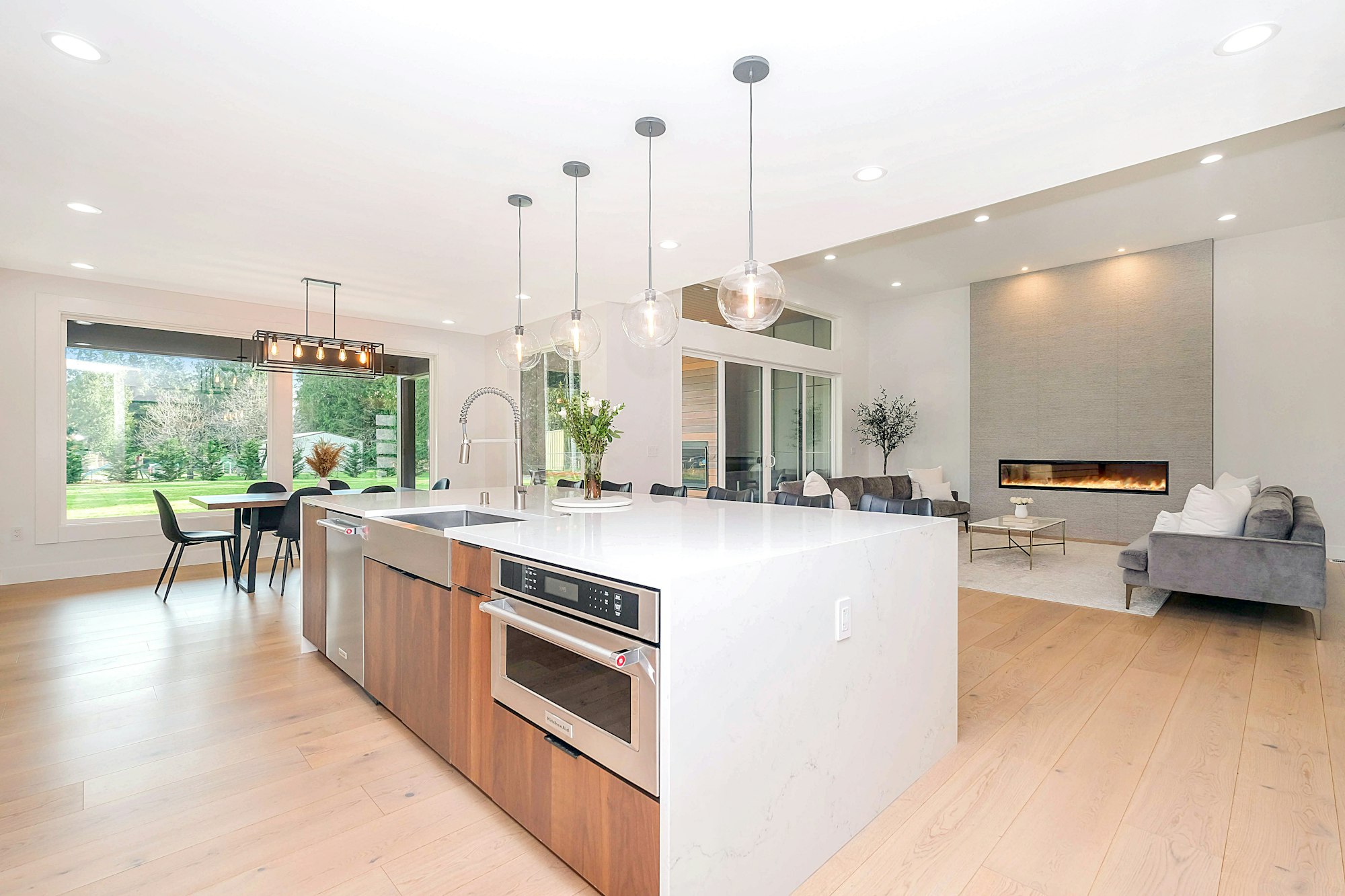
Dark floors and walls absorb light, while pale surfaces bounce it around the room. The same window can feel twice as generous in a room with the right finishes.
Warm white or soft neutral walls
Light wood or stone-look flooring
Matte or satin finishes instead of high gloss, to avoid glare
Mirrors placed opposite or next to windows
Light-colored worktops and cabinet fronts in kitchens
A light-colored floor can do as much for a room as a new window.
Rethink Windows and Doors
When a bigger change is possible, larger windows and glass doors bring in daylight and a view at the same time.
Glass Doors to the Garden
Replacing a solid back door with wide glass doors connects the living space to the outside and brightens the whole floor.
Skylights and Roof Windows
In top-floor rooms, stairwells and hallways, a skylight brings in far more light than a wall window of the same size.
Window Treatments
Heavy curtains can block a third of the daylight even when open. Light blinds or curtains that clear the window frame completely make a noticeable difference.
Plan Artificial Light Around Daylight
Good lighting design works with the sun, not against it. Layer your lighting so evenings feel as calm as a bright afternoon.
Ambient light: dimmable ceiling spots or a central fixture.
Task light: under-cabinet strips, desk lamps and mirror lights.
Accent light: wall lights and lamps that add warmth in the evening.
Where to Start
Small changes add up. Start with surfaces and openings, then consider windows and doors. You'll be surprised how different the same room can feel with more light.